Caroline's Newsletter Portfolio
Scroll to see the Newsletters!
New Film Threshold Navigates the Journey of Healing from Trauma through Dance
July 23, 2021
by Caroline Lewis

Featured: Linxin (Kisa) Li, a dancer performing in Threshold. Li is currently a Master of Fine Arts student at Florida State University, School of Dance.
Commissioned by FSU’s Center for the Advancement of Human Rights, the film Threshold uses dance and 360-degree video technology to capture the journey of four women as they heal from their past traumas.
Threshold was co-produced by Malia Bruker, film director and Associate Professor in FSU’s School of Communication, and Ilana Goldman, choreographer, dancer and Associate Professor in FSU’s School of Dance.
The personal nature of the film extends beyond the film’s theme of trauma as Bruker and Goldman decided to draw inspiration from the real experiences and emotions felt by the dancers featured in the film as well as the filmmakers.
The four dancers performing in Threshold are Annali Rose Clevenger, Ilana Goldman, Kehinde Ishangi, Linxin (Kisa) Li.
360 Degree Film: An Immersive Experience
Threshold is both Bruker and Goldman’s first film shot in 360 degrees, a spherical video where every direction is recorded simultaneously. Because of this, a headset is generally required to view the film.
Using 360 degree technology largely resulted from the COVID-19 pandemic necessitating a safer, more socially distanced space for filmmakers and performers to film in as it required less on-site staff and could be shot while maintaining a minimal distance of 6-feet-apart.
Moreover, Goldman explained how filming in 360 degree compliments the personal theme of the film (which focuses on trauma through dance) by creating a more immersive experience for the viewer, describing it as, “a good way for the viewer to actually feel like a part of the film and to question their role in the situation.”
Adding, “To witness it but also be immersed in it. We thought it would create more empathy.”
Capturing Threshold in 360 technology also served to heighten more psychological representations of trauma’s impact as Professor Bruker asserted, “one way of representing trauma and sexual trauma is a tightening, like a very compressed environment. And a release from that and moving beyond that can often feel like a spatial kind of release.”
Even creating the film was a completely different experience as the film was shot with long takes and minimal editing. “And so it feels like a live performance. It's the first time I’ve ever made a dance film that felt like a live performance,” said Professor Goldman, who choreographed and danced in the film.
Featured: Annali Rose Clevenger, a dancer and former professional ballet dancer, performing in Threshold. Clevenger recently graduated from Florida State University’s College of Fine Arts with a Master of Fine Arts degree in Dance.
Healing in Threshold
Goldman explained the role that dance played in communicating how the body responds to trauma and plays a part in healing. “The body may say things that words can’t. And sometimes things can't really be explained. But they can be felt and experienced,” she said.
While trauma is often an isolating experience, Threshold conveys how being in community with others can ignite a healing process.
“One of the most important aspects of the film is the isolation that you can feel when you've experienced trauma, how alone and isolated you can be. And then, through the process of healing, there's a sense of connection and community,” said Professor Goldman.
Above are pieces of Kintsugi pottery (photo credit: here).
Drawing inspiration from the concept of the Japanese art of Kintsugi, where broken pottery is reunited with gold lacquer, Goldman explained how that imagery influenced the direction of Threshold.
“You can't erase the trauma, or the brokenness, what broke, you can't erase it, but you can put yourself back together. And those scars can make you beautiful. They’re part of your new self but you can move forward,” she said.
Threshold will be shown at the Agropoli Dance Festival in Agropoli, Italy from July 23 to the 25th. Tallahassee audiences can view Threshold at FSU’s Museum of Fine Arts on Oct. 7 and Oct. 9. While an official date is yet to be set, the film is anticipated to screen on FSU campus in the coming Fall 2021 or Spring 2022 semester.
For more information about Threshold, contact Malia Bruker at malia.bruker@cci.fsu.edu or Ilana Goldman at igoldman@fsu.edu.



Leon County’s Hidden Slave Trade Revealed in New Documentary “Invisible History” by FSU Film Professor Valerie Scoon
June 14, 2021
by Caroline Lewis

Featured: Valerie Scoon, producer and director of Invisible History. Scoon is a filmmaker and professor at FSU’s Film School. “Invisible History” is Scoon’s third documentary film project. Her background includes experience as a studio executive at Warner Brothers and professional work done in collaboration with Oprah Winfrey.
Many of us have little knowledge of what lies beneath the foundation of north Florida and what would later become Tallahassee, Florida’s state capitol. FSU Film Professor Valerie Scoon came to this realization after moving near a plantation cemetery in the Betton Hills neighborhood of Tallahassee. Intrigued by the elusive nature of the graveyard’s past, she decided to look into the history of the former plantations in the area and ended up discovering more than she had anticipated.
“What I expected was to find out there was one or two or maybe three plantations,” said Scoon. Instead, she discovered “a ton” of plantations in Leon and surrounding counties, in what once comprised “the cotton belt of Florida.”
What was originally intended to be a summer project soon became a documentary revealing the dark roots that laid the foundation for North Florida, once referred to as “Middle Florida.”
Professor Scoon’s documentary, Invisible History: Middle Florida’s Hidden Roots tells the little-known story of North Florida’s slave trade that began in the early 1800s with the forced migration of over a million enslaved people from the upper South, Virginia and North Carolina, to the lower South, Middle Florida.
Going Beyond The Basics
Invisible History peels back the layers of this massive internal slave migration. Scoon draws extensively from journal entries of enslaved persons forced to walk hundreds of miles from the upper South to their new plantations in Middle Florida. She contends that diving into the history with real, personal accounts allows the weight of its depth to shine through “as opposed to just hearing a large number of facts” as one may have studied in history class regarding the slave trade.
“For me, it’s telling the story of enslaved people who lived in Middle Florida . . . whose evidence of their lives is not clearly marked everywhere,” she explained, stressing her vision of bringing that history forth “so we can all be more aware of it.”
Utilizing historical records from local museums such as The Grove and The Goodwood, Scoon was able to piece together the past and unify it within this film. In the course of producing her third documentary, she found the process of turning an idea “into something that’s actually tangible,” to be the best part of creating the film.
Addressing Invisible History’s relevance to the U.S.’s current racial justice movement, Professor Scoon notes, “Understanding history does inform the present. And if you have better tools, and a better understanding of how you got somewhere, you may have better ideas of how to solve the problem.”
After watching Invisible History, Scoon hopes viewers will “have their own journey and start their own conversations,” and that the documentary will get the conversation started.
Originally premiered nationwide on June 10th, Invisible History: Middle Florida’s Hidden Roots was also aired by WFSU on June 19th, as part of its Juneteenth commemoration.
Invisible History was made possible by the Florida Department of State Division of Cultural Affairs with additional funding provided by FSU’s Center for the Advancement of Human Rights and FSU’s President’s Council on Diversity and Inclusion. Other notable contributors who made Invisible History possible are listed here.
The Center for the Advancement of Human Rights and the FSU Civil Rights Institute will sponsor an FSU campus premiere of Invisible History on Tuesday October 12th in the FSU Student Life Cinema. There will be a 6:00 PM reception, a 7:00 PM screening, and a panel discussion featuring Professor Scoon and Professor Patrick Mason. The event is free and open to the public.
Intern Spotlight: FSU's Center for the Advancement of Human Rights
June 14, 2021
by Caroline Lewis
Thomas Capobianco

Featured: Thomas Capobianco, double majored in Criminology and International Affairs.
During his internship in Spring of 2021, Thomas Capobianco conducted research on policy changes, tracked human trafficking bills, and assisted with research projects for cases being represented. Currently, Capobianco interns with the Department of Defense in Miami and aims for a career in National Security Intelligence.
Addressing how his time at the Center aligned him with his goals, Capobianco said, “a huge aspect of national security intelligence is balancing human rights and remembering that, for every action, whether it’s military, or just in general, it’s always important to think of your kind of secondary or tertiary consequences.” Adding, “Whether it's refugees that may have to flee or people that are (being) displaced from their homes…. Human rights should always be at the forefront of people’s minds when making decisions like that.”

Madelyn Johnson
Featured: Madelyn Johnson, double majored in Middle Eastern Studies and International Affairs.
In Fall of 2020, Madelyn Johnson operated as a case management intern with the CAHR. While at the Center, she gained insight into the “legal aspect of refugee work” and helped create a resource directory of human rights organizations throughout Florida.
Now, Johnson interns at the International Rescue Committee in Washington, DC, aiming to fulfill a career in International Humanitarian Policy. Johnson’s internship works with global forces like the World Bank and the UN. Johnson credits her time working at the CAHR with helping her carry a more individualized perspective when dealing with global matters.
“Having worked at the CAHR, it's way easier to understand how (the UN and World Bank) actually impact human beings, because sometimes thinking about the World Bank is so large, but what I did in Tallahassee directly impacted people's lives. I keep that in mind for doing this work,” she said.
Lucy Walsh

Pictured: Lucy Walsh, double majored in Political Science and International Affairs.
From August 2020 to May 2021, Lucy Walsh interned at the CAHR fulfilling the role of filing, reviewing immigration documents, and helping fill them out based on interviews with potential clients. Now, Lucy is applying to get her master’s degree in International Affairs with the goal of becoming a human rights lawyer. Lucy credits the Center with growing her passion by making her feel like she has an impact.
“When it comes to things like human rights and International Affairs, it's very easy to sort of fall into a mindset where you think that you can't help on a larger scale. But working at the CAHR, and working with so many cool cases on human rights. It really helps put in perspective... the amount of privilege that we have, the ability that we have, to impact people around us,” she said.
Giovanna Garcia
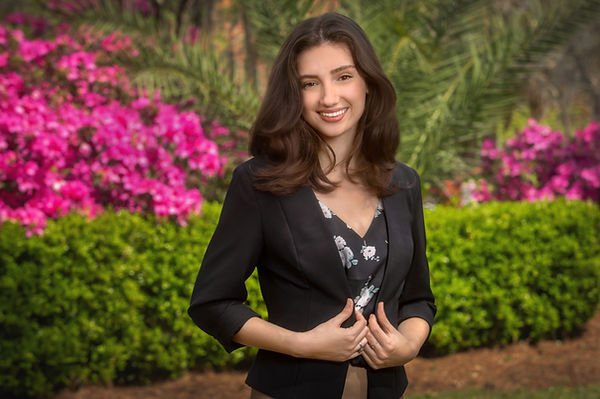
Featured: Giovanna Garcia, double majored in International Affairs and Political Science.
During her time at the Center, Fall 2018 to Spring 2021, Giovanna Garcia helped translate for clients and process client applications. Aiming for a career in International Law with a focus on migration, for the past year Giovanna has worked as a legislative coordinator for Florida’s Amnesty International.
Giovanna found that her years at the Center gave her insight into topics like immigration which has been useful for her current position. “When I'm lobbying, talking to different legislators or questioning people about the bill, because I have kind of a firsthand perspective into how immigration issues affect immigrants- I'm better able to speak on the importance of that special organization because I have that background information,” she said.
Daniela Donoso

Featured: Daniela Donoso, double majored in International Affairs and Interdisciplinary Social Science.
Finding her passion in immigration law advocacy, Daniela Donoso interned at the CAHR from Fall 2014 to May 2020, a very extensive period as she grew a passion for advocacy and would later progress to law school. While at the Center, she worked as a translator, later becoming the student program coordinator.
Today, Daniela works as an attorney with legal services in North Florida as an equal justice work fellow. Her fellowship was designed as “a mirror” and an extension of her previous work done at the Center, adding to the immigration program of North Florida.
“Even writing and thinking about the fellowship was really mostly from experience from working at the Center for so long. And understanding the gaps and the restrictions that we had ourselves and trying to remedy some of those things, in terms of lack of resources for people who really needed it in our area,” she said.
Karis Edwards

Featured: Karis Edwards, majored in Political Science.
Karis Edwards interned at the Center in Spring 2018 and Summer 2020. Now, Karis is fulfilling an extern-ship at the CAHR over this Summer.
Karis chose to keep coming back due to the convenient on-campus location of the Center, next to the FSU law school she attended. Over many semesters, Karis would file, contribute to immigration relief, and later would oversee the Center’s interns.
Although Karis, a recent graduate, remains uncertain as to what type of lawyer she wants to be, she maintains that she knows the kind of lawyer she strives to be. “I want to emulate Vania and Terry,” she said, “they’re just so forthcoming with their advice, they treat everyone with such compassion.”
Harseerat Dhillon

Featured: Harseerat Dhillon, majoring in Economics
Harseerat Dhillon is currently interning at the Center for the Summer 2021 semester.
The most impactful thing Harseerat has learned during her internship is how difficult the immigration process is for those from at-risk countries.
"I have only been at CAHR for about a month now, but even this short time has helped me grow into and further realize my passion of wanting to be a civil rights lawyer," she said.
"Working here has allowed me to help people and that is my main goal."
Freynaldo Adrian
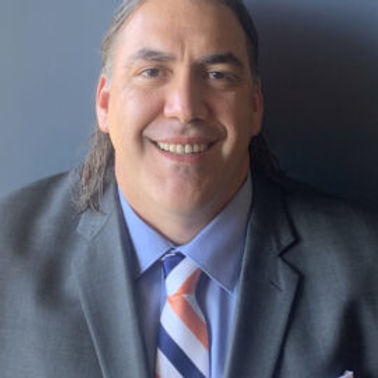
Featured: Freynaldo “Frey” Adrian, completed his Master of Laws degree (LLM).
Freynaldo Adrian interned at the CAHR during the Summer 2021 semester.
Having just completed his Master of Laws degree (LLM), Adrian aims to practice Immigration and International Human Rights Law with a focus on Asylum. Originally from Venezuela, Freynaldo wants to help others going through immigration proceedings, especially asylum cases.
“Working with real cases at the CAHR was the ideal moment to put into practice everything I learned at the law school. Completing immigration forms and interviewing clients are wonderful tools that I am 100% sure I will use in my career in the future,” he said.
Habits for a Successful Internship from Former Interns at the Center for the Advancement of Human Rights
LinkedIn Article Draft
July 18, 2021
by Caroline Lewis

Featured are former interns from the Center for the Advancement of Human Rights.(Top left) Giovanna Garcia, (Bottom left) Thomas Capobianco, (Top right) Daniela Donoso, (Bottom Right) Lucy Walsh.


